New Trends in Software Development: How Modern Technology Is Reshaping the Future

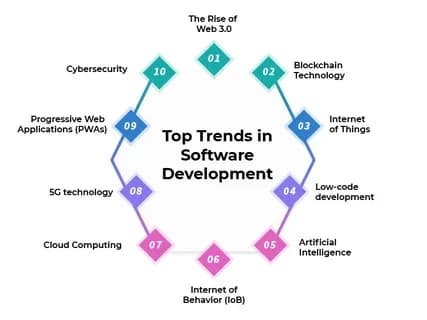
New Trends in Software Development: How Modern Technology Is Reshaping the Future
Software development is no longer just about writing code.
Applications today must scale globally, integrate seamlessly, adapt quickly, and remain secure under constant change. What worked five years ago is no longer enough. Businesses, developers, and startups are being reshaped by new trends in software development that focus on speed, intelligence, automation, and user experience.
The future of software development is not incremental—it is transformational.
Understanding these trends is critical for developers, students, and organizations that want to stay competitive in an evolving digital world.
What Are the New Trends in Software Development?
New trends in software development refer to modern technologies, practices, and methodologies that are changing how software is designed, built, deployed, and maintained.
These trends focus on:
- Faster development cycles
- Intelligent automation
- Cloud scalability
- Enhanced security
- Better developer productivity
- Improved user experience
Together, they define how modern software systems are created.
1. Artificial Intelligence in Software Development
AI is no longer an optional feature—it is becoming a core part of software development.
Developers now use AI to:
- Generate code
- Detect bugs automatically
- Optimize performance
- Analyze user behavior
- Improve decision-making
AI-powered development tools increase efficiency while reducing human error. This trend is reshaping how applications are built and maintained.
2. Cloud-Native Software Development
Cloud-native development focuses on building applications specifically designed to run in the cloud.
Key characteristics include:
- Microservices architecture
- Containerization
- High availability
- Automatic scaling
Cloud-native applications allow businesses to deploy faster, scale globally, and reduce infrastructure complexity. This is one of the most impactful trends in modern software development.
3. DevOps and Automation
DevOps bridges the gap between development and operations by automating workflows and improving collaboration.
Modern DevOps practices include:
- Continuous integration and deployment (CI/CD)
- Infrastructure as code
- Automated testing
- Monitoring and logging
Automation enables faster releases, better reliability, and reduced downtime—making DevOps essential for modern software teams.
4. Low-Code and No-Code Development Platforms
Low-code and no-code platforms allow applications to be built with minimal manual coding.
These platforms are gaining popularity because they:
- Speed up development
- Reduce dependency on large teams
- Enable non-technical users to build solutions
- Lower development costs
While not a replacement for traditional development, low-code platforms are powerful for internal tools and rapid prototyping.
5. Cybersecurity-First Software Development
Security is no longer an afterthought.
Modern software development follows a security-by-design approach where security is integrated from the earliest stages of development.
Key focus areas include:
- Secure authentication and authorization
- Data encryption
- Secure APIs
- Regular vulnerability testing
As cyber threats increase, security-focused development has become a critical trend.
6. API-First Development Approach
API-first development prioritizes building robust APIs before developing front-end applications.
Benefits include:
- Easier integration between systems
- Better scalability
- Improved developer collaboration
- Support for multiple platforms
APIs enable software ecosystems rather than isolated applications.
7. Web3 and Blockchain-Based Applications
Decentralized technologies are influencing modern software architecture.
Web3 and blockchain applications focus on:
- Decentralization
- Transparency
- Secure transactions
- Smart contracts
Although still evolving, these technologies are creating new opportunities in finance, identity management, and digital ownership.
8. Internet of Things (IoT) and Edge Computing
IoT applications connect physical devices with software systems.
Edge computing processes data closer to the source, reducing latency and improving performance. This trend is essential for real-time applications such as smart devices, healthcare monitoring, and industrial automation.
9. Developer Experience (DevEx) as a Priority
Modern software teams prioritize developer experience to improve productivity and code quality.
This includes:
- Better tooling
- Clear documentation
- Faster feedback loops
- Simplified workflows
Happy developers build better software faster.
Why These Software Development Trends Matter
Adopting modern software development trends helps organizations:
- Build scalable systems
- Reduce technical debt
- Improve security
- Deliver better user experiences
- Stay competitive in fast-changing markets
Ignoring these trends increases the risk of outdated systems and inefficiency.
New Trends in Software Development for Freshers
For students and freshers, focusing on these trends can significantly improve career opportunities:
- Cloud computing fundamentals
- DevOps tools
- AI basics
- API development
- Cybersecurity principles
Learning trend-aligned skills makes candidates industry-ready.
The Future of Software Development
The future of software development will be:
- More automated
- More intelligent
- More secure
- More scalable
Developers who adapt to these changes will shape the next generation of technology-driven solutions.
Frequently Asked Questions About Software Development Trends
What are the new trends in software development?
New trends include AI integration, cloud-native development, DevOps automation, low-code platforms, cybersecurity-first design, and API-first architecture.
Which software development trend is best for freshers?
Cloud computing, DevOps, and API development are highly recommended for beginners.
Is AI replacing software developers?
No. AI enhances developer productivity but does not replace human problem-solving and creativity.
Why is cloud-native development important?
Cloud-native development enables scalability, reliability, and faster deployment of modern applications.
Tools and Technologies Shaping Modern Software Development
- Cloud Platforms (AWS, Azure, GCP)
- DevOps Tools (Docker, Kubernetes, CI/CD)
- AI Development Tools
- API Management Systems
- Automation Frameworks
Build Future-Ready Software with CodeStam
https://codestam.com/software-solutions