How to Build a Scalable Web App Using Modern Tech Stack (2026 Guide)

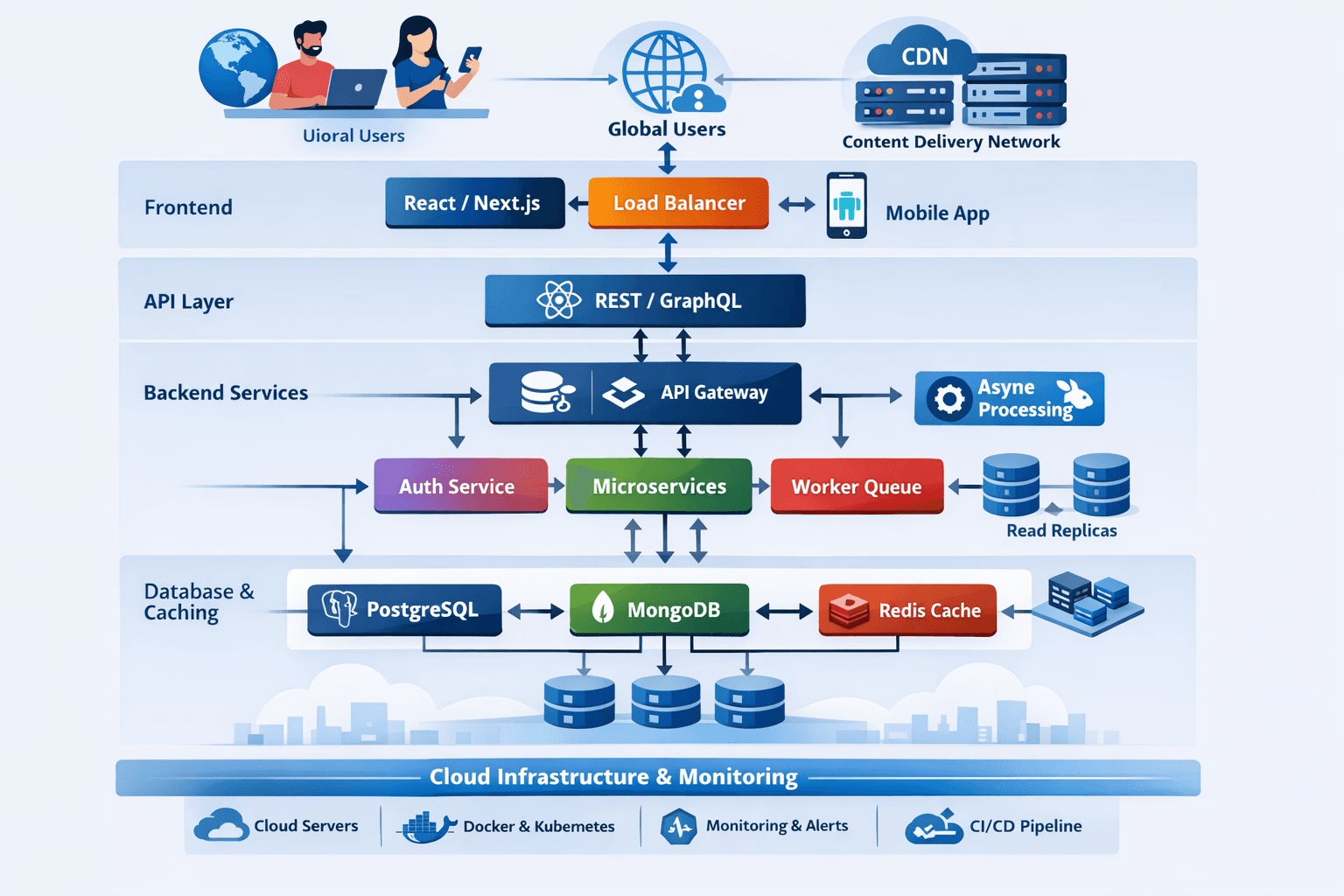
How to Build a Scalable Web App Using Modern Tech Stack (2026)
In today’s fast-growing digital world, building a web application is easy—but building a scalable web application that can handle growth is the real challenge.
Businesses and startups need applications that can manage increasing users, high traffic, and real-time data without performance issues.
If you're looking to understand how to build a scalable web app using modern tech stack, this complete guide will help you step-by-step.
What is a Scalable Web Application?
A scalable web application is designed to handle growth efficiently.
It ensures:
- Smooth performance with increasing users
- Ability to handle high traffic loads
- Easy infrastructure expansion
- Long-term stability and reliability
Without scalability, applications crash, slow down, or fail under pressure.
Why Scalability Matters in 2026
Modern applications deal with:
- Millions of users 🌍
- Real-time data processing 📊
- AI and automation 🤖
If your app is not scalable:
- Users will face slow loading
- Servers may crash
- Business growth will be affected
That’s why scalability is no longer optional—it’s essential.
Modern Tech Stack for Scalable Web Applications
Choosing the right tech stack is the foundation of scalability.
Frontend Technologies
- React.js
- Next.js
- Tailwind CSS
These technologies help build fast, responsive, and SEO-friendly user interfaces.
Backend Technologies
- Node.js
- Express.js
They provide high performance and support asynchronous processing, making them ideal for scalable systems.
Database Solutions
- PostgreSQL (Relational)
- MongoDB (NoSQL)
- Redis (Caching)
Using the right database improves speed and data handling.
Cloud & DevOps
- AWS
- Docker
- Kubernetes
Cloud infrastructure allows applications to scale dynamically based on demand.
Step-by-Step Guide to Build a Scalable Web App
Follow these steps to build a scalable system:
1. Define Requirements
Before development, clearly define:
- Number of users
- Expected traffic
- Features and functionality
This helps in planning scalability from the start.
2. Choose the Right Architecture
You can choose between:
- Monolithic Architecture (for small apps)
- Microservices Architecture (for large scalable apps)
Microservices allow independent scaling of different components.
3. Design Scalable Database
Focus on:
- Proper indexing
- Query optimization
- Read replicas
This improves performance under heavy load.
4. Build Efficient APIs
Ensure your APIs are optimized with:
- Pagination
- Rate limiting
- Data validation
Efficient APIs reduce server load and improve response time.
5. Implement Caching
Caching reduces database load and improves speed:
- Redis caching
- CDN (Content Delivery Network)
This is critical for high-performance applications.
Key Scaling Techniques
To handle growth effectively, use:
Horizontal Scaling
Add more servers to distribute load.
Vertical Scaling
Increase server power (CPU, RAM).
Load Balancing
Distribute traffic across multiple servers.
CDN Integration
Deliver content faster globally.
Common Mistakes to Avoid
While building scalable apps, avoid:
- Ignoring performance optimization
- Poor database design
- No caching strategy
- Tight coupling in architecture
These mistakes can break your system at scale.
Benefits of Scalable Web Applications
A scalable application helps you:
- Handle high traffic smoothly
- Improve user experience
- Reduce downtime
- Support business growth
- Increase revenue opportunities
Latest Trends in Scalable Web Development (2026)
Top developers are adopting:
- Server-side rendering (Next.js)
- API-first architecture
- AI-powered applications
- Edge computing
- Microservices & containerization
These trends help build future-ready applications.
How to Choose the Right Tech Stack
Before choosing technologies, consider:
- Project size
- Budget
- Scalability needs
- Developer expertise
- Future expansion
The right stack ensures long-term success.
Final Thoughts
Building a scalable web application is not just about coding—it’s about planning for growth.
Using modern technologies like React, Next.js, Node.js, and cloud infrastructure, you can build applications that perform efficiently even under heavy load.
If you want long-term success, always focus on performance, scalability, and architecture from the beginning.
Frequently Asked Questions (FAQs)
What is a scalable web application?
A scalable web application can handle increasing users and traffic without performance issues.
Which tech stack is best for scalable apps?
React, Next.js, Node.js, and cloud platforms like AWS are widely used.
What is the difference between vertical and horizontal scaling?
Vertical scaling increases server power, while horizontal scaling adds more servers.
Why is caching important?
Caching improves speed and reduces load on the database and servers.
Need Help Building a Scalable Web App?
Want to build a high-performance, scalable application?
- 🚀 Scalable Software Solutions
- 📱 Modern Web Development
- 📞 Talk to Experts
Build smart. Scale faster. Grow bigger 🚀