Digital Transformation Services: How Businesses Modernize, Scale, and Compete in 2026

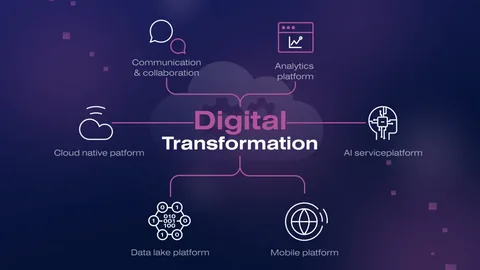
Digital Transformation Services: How Businesses Modernize, Scale, and Compete
Most businesses don’t fail because of bad ideas. They struggle because outdated systems slow them down.
In the fast-paced market of 2026, manual workflows, disconnected tools, legacy software, and delayed decision-making act as invisible anchors. As global competition grows and customer expectations for "instant" service increase, these efficiency gaps become impossible to ignore.
This is where professional digital transformation services play a critical role. Done correctly, digital transformation doesn’t just involve upgrading your technology—it reshapes how your entire business operates, delivers value to customers, and scales sustainably for the future.
At Codestam Technologies, we view digital transformation not as an "event," but as a continuous journey toward operational excellence.
1. What Are Digital Transformation Services?
Digital transformation services help businesses adopt modern technology to improve internal operations, automate repetitive processes, and enable truly data-driven decision-making.
Unlike simple IT maintenance or standard software upgrades, digital transformation is a holistic approach focused on:
- Foundational Modernization: Replacing manual, error-prone workflows with automated systems.
- System Integration: Breaking down silos so your sales, marketing, and operations teams share the same real-time data.
- Legacy Software Refactoring: Moving from rigid, old-school software to flexible, cloud-native architectures.
- Customer Experience (CX) Evolution: Using digital portals and AI to provide a seamless journey for your clients.
The ultimate goal is not "using technology" for its own sake—it is measurable business improvement and long-term agility.
2. Why Digital Transformation is No Longer Optional in 2026
Many organizations rely on systems that were built for a different era of their growth. Over time, these systems introduce friction instead of efficiency. If you find yourself working for your tools rather than your tools working for you, it's time for a change.
Common signs a business is ready for strategic software solutions:
- Spreadsheet Overload: Your business is still run on complex, fragile Excel files and manual reporting.
- Fragmented Tools: You use dozens of apps that don't talk to each other, leading to data duplication.
- Zero Visibility: Leadership cannot get an accurate, real-time snapshot of company performance.
- Stagnant Growth: It feels like you need to hire 10 new people just to handle a 10% increase in orders.
Business digital transformation removes these constraints, preparing your organization to scale without the proportional overhead.
3. Core Pillars of Digital Transformation
A successful transformation covers several key areas of the business, tailored to your specific industry needs.
Process Automation & AI Integration
Automation is the quickest win in any transformation. By identifying repetitive tasks—like invoice processing, lead assignment, or inventory tracking—we can build systems that handle these in seconds with zero errors. In 2026, this also includes integrating AI-driven insights to predict customer behavior or optimize supply chains.
Legacy System Modernization
Many businesses are held hostage by "legacy debt"—old systems that are expensive to maintain and impossible to integrate. We modernize these by moving them to the cloud or building API-first interfaces that allow them to communicate with modern web and mobile applications.
Cloud & Scalable Infrastructure
Moving to the cloud isn't just about storage; it's about scalability. With cloud-native transformation, your website or internal systems can handle 1,000% traffic spikes during a sale or expansion without breaking a sweat.
Data & Analytics Enablement
Data is the "new oil," but only if it's refined. Transformation involves creating a "Single Source of Truth" where all company data is centralized and visualized through real-time dashboards for better strategic planning.
4. Measuring the ROI of Digital Transformation in 2026
A common question is: "When will we see results?" In 2026, we measure ROI across several dimensions:
- Operational Efficiency: Reducing the time spent on manual data entry by 60-80%.
- Customer Lifetime Value (CLV): Improving retention rates through better digital engagement and faster support.
- Infrastructure Savings: Reducing the cost of maintaining legacy hardware by shifting to optimized cloud services.
- Decision Speed: Moving from month-end reporting to real-time BI dashboards.
Most businesses see a full return on investment within 12 to 18 months, depending on the complexity of the transformation strategy.
5. Digital Transformation vs. Traditional IT: The Difference
| Category | Digital Transformation Services | Traditional IT Services |
|---|---|---|
| Primary Focus | Business outcomes & growth enablement | Fixing hardware & "keeping the lights on" |
| Approach | Process-driven & holistic | Tool-centric & isolated |
| Sustainability | Future-ready & highly scalable | Limited flexibility to modern trends |
| ROI | Long-term efficiency & revenue boost | Short-term cost avoidance |
6. The Digital Transformation Roadmap
Successful digital transformation follows a structured, risk-mitigated approach:
- Analysis & Audit: We begin by auditing your current tech stack and interviewing your team to find the "pain points."
- Strategy Design: Defining specific KPIs (e.g., "Reduce order processing time by 40%").
- Architecture Selection: Choosing the right tools—whether it's Next.js for your frontend, a Headless CMS, or a custom ERP.
- Agile Implementation: Developing and deploying in stages to ensure business continuity.
- Continuous Optimization: Technology moves fast. We provide ongoing support to ensure your systems remain cutting-edge.
Frequently Asked Questions (FAQ)
What do digital transformation services actually include?
They include a wide range of services such as workflow automation, system modernization, cloud migration, data analytics setups, and the development of custom internal tools or customer portals. Explore our complete digital services.
Is digital transformation only for huge corporations?
Not at all. Small and mid-sized businesses (SMBs) often see the biggest proportional ROI. Transformation allows a small team to operate with the efficiency and reach of a much larger competitor.
How much does digital transformation cost in India?
The cost is variable and depends on the scope. However, at Codestam, we focus on high-impact, phased rollouts. You might start with a focused automation project that pays for itself in 3 months through saved labor hours.
How long does a typical transformation project take?
Short-term wins (like automating a single process) can take 4 weeks. A full-scale modernization of a legacy enterprise system might take 6–12 months.
Are my existing systems compatible?
In most cases, yes. We specialize in building "bridges" (APIs) between your older reliable systems and modern digital platforms, so you don't always have to "rip and replace" everything.
What is the role of AI in digital transformation in 2026?
AI acts as the logic layer, allowing systems to not just store data, but to act on it autonomously. This includes predictive maintenance, automated customer support, and dynamic resource allocation.
How do I start my company's digital transformation?
Begin with a technical audit to identify bottlenecks. We recommend starting with high-impact, low-complexity processes to build momentum. Book a free consultation with our experts.
Final Thoughts: Transformation as a Competitive Advantage
Organizations that successfully implement digital transformation adapt faster to market changes, innovate more efficiently, and deliver significantly better customer experiences. It turns your technology into a growth engine rather than an operational burden.
If your systems feel fragmented, slow, or difficult to scale, adding more "apps" won’t solve the problem. You need a unified strategy.
Start by identifying the one process that causes the most friction today. That is often the most valuable place to begin your transformation.
Ready to Modernize Your Business?
- Our Services: Explore Digital Transformation at Codestam
- Web Success: Custom Website Development Services
- Related Reading: Software Solutions Done Right
- Get Started: Schedule a Tech Audit